
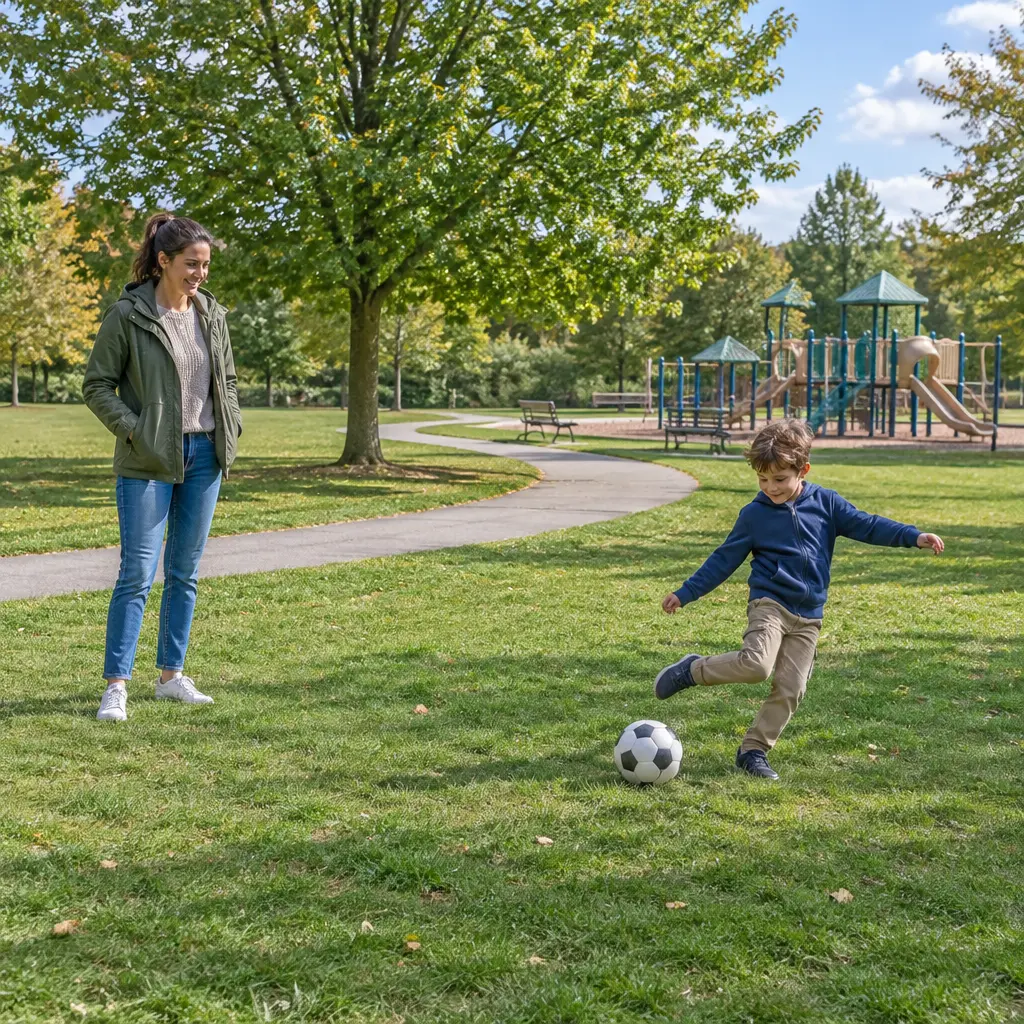
Outdoor play is active time outside—at a park, in a yard, on a trail, or in another suitable outdoor space—that lets children move, explore, and connect with other people and the natural world. Parents can make it safer and more enjoyable by matching activities to a child’s age and abilities, checking the setting and weather, using appropriate protective gear, and balancing supervision with room to explore. The Centers for Disease Control and Prevention (CDC) recommends that children ages 3–5 be physically active throughout the day, while children and adolescents ages 6–17 should get at least 60 minutes of moderate-to-vigorous physical activity daily. The guidance below covers developmental benefits, practical safety checks, age-appropriate activities, and ways to make outdoor play welcoming and fun.
Outdoor play supports children’s health and development
Outdoor play is not a single activity or a guarantee against health problems; it is a flexible setting for movement, discovery, and social interaction. The American Academy of Pediatrics (AAP) describes play as important to children’s healthy development, including learning, relationships, and emotional well-being. Outdoors, children may also encounter varied surfaces, open space, weather, and natural materials that invite different kinds of movement and exploration.
Movement and physical activity
Running, climbing, dancing, wheeling, and ball games can contribute to the daily activity recommended by the CDC. For children ages 6–17, the CDC’s benchmark is 60 minutes or more each day of moderate-to-vigorous activity, with vigorous aerobic activity and muscle- and bone-strengthening activities included on at least three days a week. These are population-level recommendations, not a requirement that every child complete one long outdoor session; short, enjoyable bouts of activity can add up.
Learning, independence, and social skills
Play can give children opportunities to practice decision-making, cooperation, communication, and persistence. A child might plan a route across stepping stones, negotiate turns on a swing, or invent rules for a game. The AAP’s clinical report on the power of play explains that play supports development and can help children practice skills in a low-pressure setting. Parents can encourage this learning by asking open-ended questions rather than directing every move.
Nature connection and discovery
Outdoor environments can prompt children to notice plants, insects, clouds, sounds, and seasonal changes. Nature play does not require wilderness or special equipment: a walk around the block, a garden, or a tree-lined playground can offer chances to observe and ask questions. Teach children to look without disturbing wildlife, avoid unknown plants and mushrooms, and leave natural areas as they found them.
Outdoor play safety begins with the setting
A safe play setting is one where likely hazards are identified and reduced before children begin. The U.S. Consumer Product Safety Commission (CPSC) advises caregivers to inspect playground equipment and its surroundings, including protective surfacing, openings, and damaged parts. A quick check matters because risks differ between a fenced yard, a public playground, a beach, and a trail.
Check playground equipment and surfacing
Look for broken equipment, sharp edges, loose hardware, excessive heat on slides or metal surfaces, and gaps where a child could become trapped. The CPSC recommends protective surfacing beneath and around playground equipment; suitable loose-fill materials or safety-tested unitary surfaces can reduce injury risk from falls when properly installed and maintained. Grass, soil, and packed dirt are not reliable substitutes for impact-attenuating playground surfacing. Follow posted age labels and keep younger children on equipment designed for their developmental stage.
Scan for hazards in yards, parks, and trails
Before play, check for traffic access, standing water, broken glass, animal waste, unstable branches, tools, chemicals, and other hazards. On trails, choose a route suited to the youngest or least experienced participant, and agree on boundaries and a meeting point. Near roads or parking areas, hold hands or use another age-appropriate safety plan. Around water, maintain close, constant supervision; the CDC identifies drowning as a leading cause of unintentional injury death for young children.
Use age-appropriate supervision
Supervision means staying close enough to notice changing conditions and respond—not simply being somewhere nearby. Babies and toddlers need continuous, attentive supervision around play equipment, water, and animals. Older children may handle more independence when parents have considered their judgment, the location, visibility, and emergency access. Set clear boundaries, explain what to do if a child becomes separated, and identify a trusted adult who can help.
Weather, sun, and protective gear make play safer
Outdoor conditions can change quickly, so safety planning includes more than equipment. Check the forecast and local alerts, bring water, dress for the conditions, and shorten or move play when heat, cold, air quality, or storms create risks. The National Weather Service advises taking heat seriously, especially for children, who may need reminders to drink and take breaks.
Sun protection and hydration
Use shade when available, cover exposed skin with clothing and a brimmed hat, and apply broad-spectrum sunscreen according to its label. The CDC recommends sun protection measures when the ultraviolet index is 3 or higher. Offer water before, during, and after active play, and plan rest breaks in hot weather. Infants younger than six months require special sun-protection precautions; ask a pediatric clinician about appropriate options.
Heat, cold, storms, and air quality
Move activity to cooler hours or a shaded place during hot weather, and stop if a child feels unwell, unusually weak, dizzy, or confused. In cold conditions, use dry layers and cover exposed skin; wet clothing can increase heat loss. Go indoors when thunder is heard or lightning is seen, and wait at least 30 minutes after the last thunder before returning outside, following National Weather Service guidance. Check local air-quality alerts and reduce strenuous outdoor activity when pollution or wildfire smoke is unhealthy, particularly for children with asthma or other respiratory conditions.
Helmets and activity-specific equipment
Choose protective gear for the activity and ensure it fits correctly. A properly fitted helmet is essential for activities such as bicycling, scootering, and skateboarding; the National Highway Traffic Safety Administration recommends a helmet that sits level, fits snugly, and is securely buckled. Helmets do not replace safe routes, adult supervision, or instruction. For wheeled activities, add appropriate protective pads where suitable, and check that equipment is in good condition before use.
Age-appropriate activities keep outdoor play engaging
A good activity fits a child’s current abilities while leaving room for choice and manageable challenge. Children develop at different rates, so use age guidance as a starting point, watch how a child responds, and adjust the activity, equipment, and supervision accordingly.
Babies and toddlers
For babies and toddlers, outdoor play can include a short stroller walk, supervised floor play on a clean blanket, gentle exploration of safe textures, or simple ball rolling. Keep small objects, choking hazards, open water, and unsafe plants out of reach. Stay close enough to prevent falls and put objects in mouths, and protect infants from overheating and direct sun.
Preschoolers
Preschoolers often enjoy pretend play, short nature hunts, bubbles, chalk, and simple obstacle courses. Create clear boundaries and offer manageable choices—for example, “Would you like to follow the path or look for round leaves?” Use play structures and wheeled toys that match the child’s size and coordination, and remain nearby as new skills develop.
School-age children and teens
Older children and teenagers may prefer cycling, team sports, hiking, gardening, dance, or self-invented games. Invite them to help select routes, check equipment, and plan water and rest breaks. Discuss traffic, staying with a group, location-sharing expectations, and what to do in an emergency. Giving young people a meaningful role can support responsibility while keeping agreed safety limits clear.
Inclusive outdoor play makes participation possible
Inclusive play adapts the activity or environment so children with different abilities, sensory needs, or health conditions can participate meaningfully. The CDC reports that about one in six U.S. children ages 3–17 has one or more developmental disabilities. That figure underscores why families and communities benefit from flexible activities rather than a single definition of “normal” play.
Adapt activities to the child
Consider a firm, accessible path; a quieter play time; visual instructions; extra transition time; or adapted balls and grips. Offer more than one way to join in, such as walking, rolling, observing, keeping score, or choosing the next game. Ask the child what helps, and consult their clinician or therapist when a medical condition affects activity or environmental safety.
Build access into family and community plans
Before visiting, check whether a park has accessible routes, restrooms, shade, seating, and equipment that supports different forms of participation. Bring familiar supports when useful and plan a quiet break if the environment becomes overwhelming. If a location is difficult to use, contact the park or local recreation department with specific access needs and suggestions.
A simple routine turns safety into a habit
A brief routine can prevent many avoidable problems without making play feel like a checklist. Families can adjust this example to their child, destination, and weather.
- Choose a destination and activity suited to the child’s abilities.
- Check the forecast, local alerts, route, equipment, and play surface.
- Pack water, weather-appropriate clothing, sunscreen, and activity-specific protective gear.
- Set supervision expectations, boundaries, and a family meeting point.
- During play, pause for water, rest, and a quick check of changing conditions.
- Afterward, check for scrapes, ticks where relevant, and any equipment that needs cleaning or repair.
Conclusion: Make outdoor play safe, active, and enjoyable
Outdoor play can support movement, learning, social connection, and curiosity when children have suitable opportunities and thoughtful supervision. Start with a safe setting, adapt activities to age and ability, prepare for weather and sun, use appropriate protective gear, and make participation inclusive. The CDC’s activity guidance offers a useful benchmark, but the most sustainable routine is one children can enjoy regularly. Choose a nearby place, invite your child to help plan, and take one practical safety step before your next outing.
Sources: Centers for Disease Control and Prevention, Physical Activity Guidelines for School-Aged Children and Adolescents, https://www.cdc.gov/physical-activity-basics/guidelines/children.html; American Academy of Pediatrics, The Power of Play: A Pediatric Role in Enhancing Development in Young Children, https://publications.aap.org/pediatrics/article/142/3/e20182058/38649/The-Power-of-Play-A-Pediatric-Role-in-Enhancing; U.S. Consumer Product Safety Commission, Public Playground Safety Handbook, https://www.cpsc.gov/s3fs-public/325.pdf; Centers for Disease Control and Prevention, Drowning Prevention, https://www.cdc.gov/drowning/prevention/index.html; Centers for Disease Control and Prevention, Sun Safety, https://www.cdc.gov/skin-cancer/sun-safety/index.html; National Weather Service, Lightning Safety, https://www.weather.gov/safety/lightning; National Highway Traffic Safety Administration, Bicycle Safety, https://www.nhtsa.gov/road-safety/bicycle-safety; Centers for Disease Control and Prevention, Autism and Developmental Disabilities Monitoring Network, https://www.cdc.gov/autism/data-research/.