
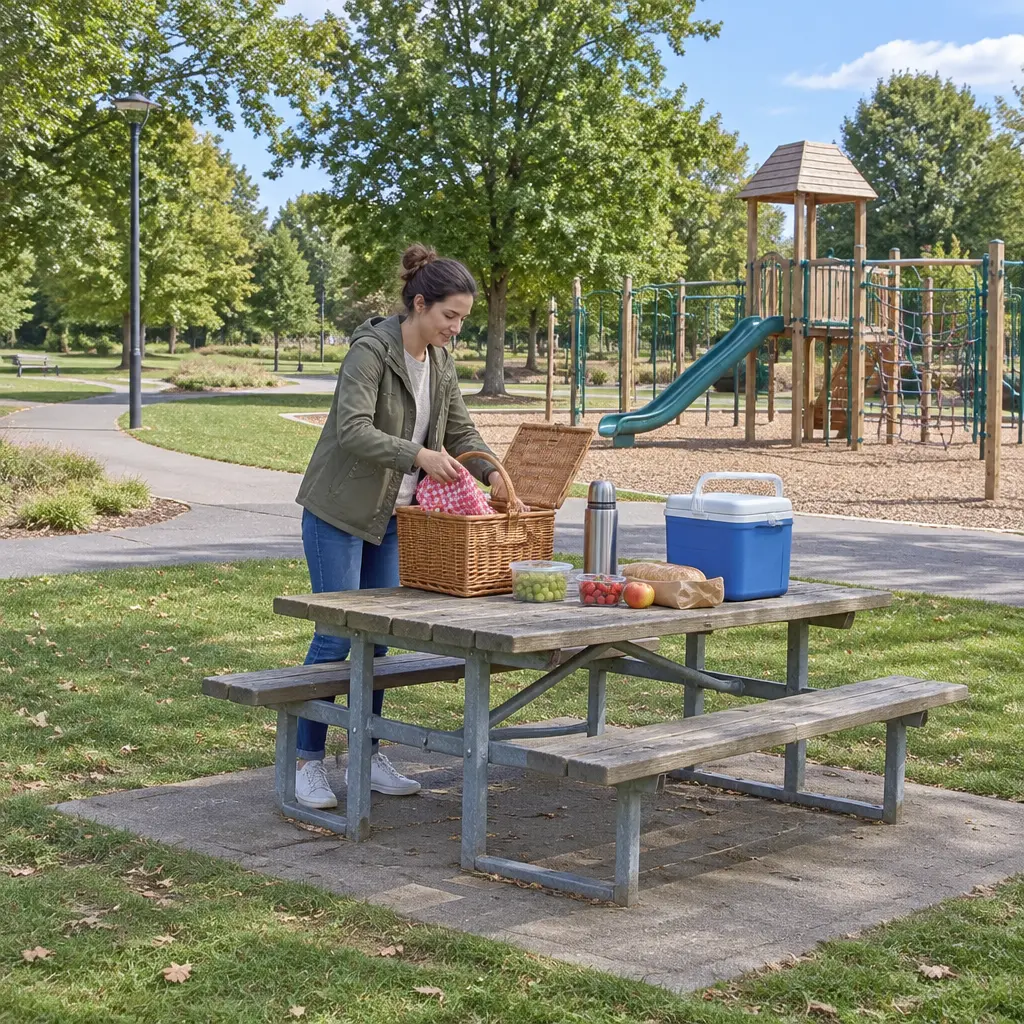
Families get the most from leisure parks when a picnic spot is close to play, shade, toilets, and safe paths—not just a patch of grass. A leisure park is a public or managed outdoor recreation area combining amenities such as lawns, playgrounds, trails, and picnic facilities. The best family choices balance play opportunities with comfort and practical needs: the National Recreation and Park Association (NRPA) reported that 84% of U.S. residents said access to high-quality parks and recreation is important to their quality of life in its 2023 engagement research. The guide below compares playground-adjacent picnic areas, shaded lawns, nature-play spaces, and waterfront or trail-side spots, and explains how to choose one for different ages and plans.
How Picnic-and-Play Spots Improve Family Park Visits
A picnic-and-play spot is a park setting where families can eat and supervise recreation within a convenient, comfortable area. The NRPA describes parks and recreation as providing places and programs that support health, well-being, and community connection; in practice, a family-friendly spot brings those benefits together by making rest and active play easy to combine. Useful characteristics include nearby seating, shade, clean and accessible paths, visible play areas, and restrooms within a reasonable walk.
The U.S. Centers for Disease Control and Prevention recommends that children ages 3–5 be physically active throughout the day and that children and adolescents ages 6–17 get at least 60 minutes of moderate-to-vigorous physical activity daily. A park visit cannot meet every child’s daily needs by itself, but a playground, open lawn, or walking route can make movement part of a family outing. The following spot types serve different combinations of activity, supervision, and downtime.
Playground-adjacent picnic tables
These are tables or benches positioned near a play structure, allowing adults to prepare food or rest while keeping children in view. They work especially well for short visits and mixed-age groups, but proximity does not replace active supervision. Look for clear sightlines, a safe separation from vehicle routes, and enough room for strollers or mobility devices.
Shaded lawns and grove picnic areas
A shaded lawn or grove provides flexible space for blankets, snacks, and informal games such as catch. Shade can make a summer outing more comfortable, but tree cover changes throughout the day and does not eliminate heat or ultraviolet exposure. The CDC advises seeking shade and using other sun-protection measures; families should bring water, hats, and sunscreen rather than relying on trees alone.
Nature-play and open-field areas
Nature-play areas invite children to explore natural features—such as logs, rocks, gardens, or gently sloped terrain—while open fields support running and group games. These settings offer less structured play than conventional equipment, so families should check for hazards, boundaries, and age-appropriate supervision. A nearby picnic table or blanket area gives children a place to pause without ending the activity.
Once a family identifies the kind of play it wants, the next decision is how the spot’s layout and facilities support comfort, accessibility, and safe supervision.
What Makes a Leisure-Park Picnic Spot Family-Friendly
A family-friendly picnic spot is one that enables different ages and abilities to reach facilities, participate in recreation, and rest with reasonable ease. The U.S. Access Board explains that the 2010 ADA Standards for Accessible Design establish minimum accessibility requirements for facilities covered by the Americans with Disabilities Act. For park visitors, practical features include firm, stable routes, accessible picnic surfaces where provided, and an accessible route connecting key amenities. Families should check local park maps or contact the operator because facilities differ from site to site.
Shade, seating, and water
Shade, seating, and drinking water help families stay longer and take breaks between active play. Before visiting, confirm whether drinking fountains, refill stations, or shelters are available and whether they operate seasonally. During hot weather, plan breaks and bring enough water; the National Weather Service notes that heat risk depends on factors including temperature, humidity, sun exposure, and physical activity.
Restrooms, paths, and stroller access
Restrooms and continuous paths turn a convenient-looking picnic area into a practical destination for caregivers with toddlers, strollers, or mobility needs. Check a park’s official map for restroom locations, path surfaces, slopes, and any temporary closures. When online information is limited, a quick call to the park office can clarify whether facilities are open and whether a route is suitable for your group.
Visibility and separation from hazards
Good visibility lets caregivers monitor play while seated, while separation from parking lots, roads, and water edges reduces avoidable risks. Choose a table with an unobstructed view when possible, set clear boundaries with children, and establish a meeting point. At waterfront parks, follow posted warnings and keep close supervision near shorelines; shallow water can still present a drowning hazard.
Choosing the Right Spot for Different Family Outings
The best location depends on the outing’s length, children’s ages, weather, and the group’s access needs. Rather than searching for a single “best” park feature, match the setting to the activity and verify current conditions before leaving.
For toddlers and preschoolers
Choose a compact playground with a nearby table, a visible boundary, and a restroom within a short walk. A small blanket area away from swings and circulation paths can give young children a calm snack break. Inspect equipment and ground surfaces before play, and follow posted age guidance.
For school-age children and active groups
An open lawn, sports court, or trail-side picnic area gives older children more room to move. Bring simple equipment such as a ball or frisbee only where park rules allow it, and select a base spot where bags and food will not obstruct paths. For a longer walk, identify restrooms and water points along the route before setting out.
For multigenerational or accessibility-focused visits
Look for a level route between parking, picnic tables, restrooms, and the main play area, along with seating that supports frequent rests. Call ahead about accessible parking, surfaces, and facility availability, since a feature shown on a general map may be closed or difficult to reach under current conditions. A spot with nearby shade and a quieter seating area can help relatives participate at their own pace.
Planning a Comfortable and Responsible Park Picnic
A little preparation helps families enjoy the park while protecting shared spaces. Check weather, park hours, reservation requirements, fire or grill rules, and any alerts for trail or playground closures. Pack water, sun protection, basic first aid, and a bag for rubbish; use designated bins and leave natural features undisturbed.
- Choose a spot with a clear view of the play area and a safe route to facilities.
- Bring water, hats, sunscreen, and weather-appropriate layers.
- Check the park’s rules for grills, pets, ball games, and picnic reservations.
- Keep food secured, supervise children around water and equipment, and take rubbish with you if bins are full.
- Confirm accessibility and facility status with the park operator when those details affect the visit.
For an illustrative outing, a family with a preschooler and a school-age child might choose a shaded table beside a playground that also connects to a short paved loop. The younger child can use age-appropriate play equipment while the older child walks or plays nearby; everyone can regroup at the table for snacks. This arrangement is not a claim about one specific park, but it demonstrates how proximity, visibility, and varied activity can make one location work for different needs.
Conclusion: Build the Outing Around Play, Comfort, and Access
The strongest picnic-and-play spots combine convenient facilities with safe, engaging recreation. Playground-adjacent tables suit short visits, shaded lawns support relaxed picnics, and nature-play areas or open fields offer room to explore. Shade, accessible routes, restrooms, visibility, and current park conditions help determine whether a location works for a particular family.
Because parks support physical activity, family time, and community life, choosing a suitable spot can make outdoor recreation easier to include in everyday routines. Use the park’s official map, check local rules and closures, and plan around the needs of everyone attending. For further guidance, consult your local parks department, the CDC’s physical-activity recommendations, and the U.S. Access Board’s accessibility resources.
Sources: National Recreation and Park Association, 2023 NRPA Engagement With Parks Report, https://www.nrpa.org/publications-research/research-papers/2023-engagement-with-parks-report/; Centers for Disease Control and Prevention, Physical Activity Guidelines for School-Aged Children and Adolescents, https://www.cdc.gov/physical-activity-basics/guidelines/children.html; Centers for Disease Control and Prevention, Sun Safety, https://www.cdc.gov/skin-cancer/sun-safety/index.html; U.S. Access Board, 2010 ADA Standards for Accessible Design, https://www.access-board.gov/ada/; National Weather Service, Heat Safety, https://www.weather.gov/safety/heat