
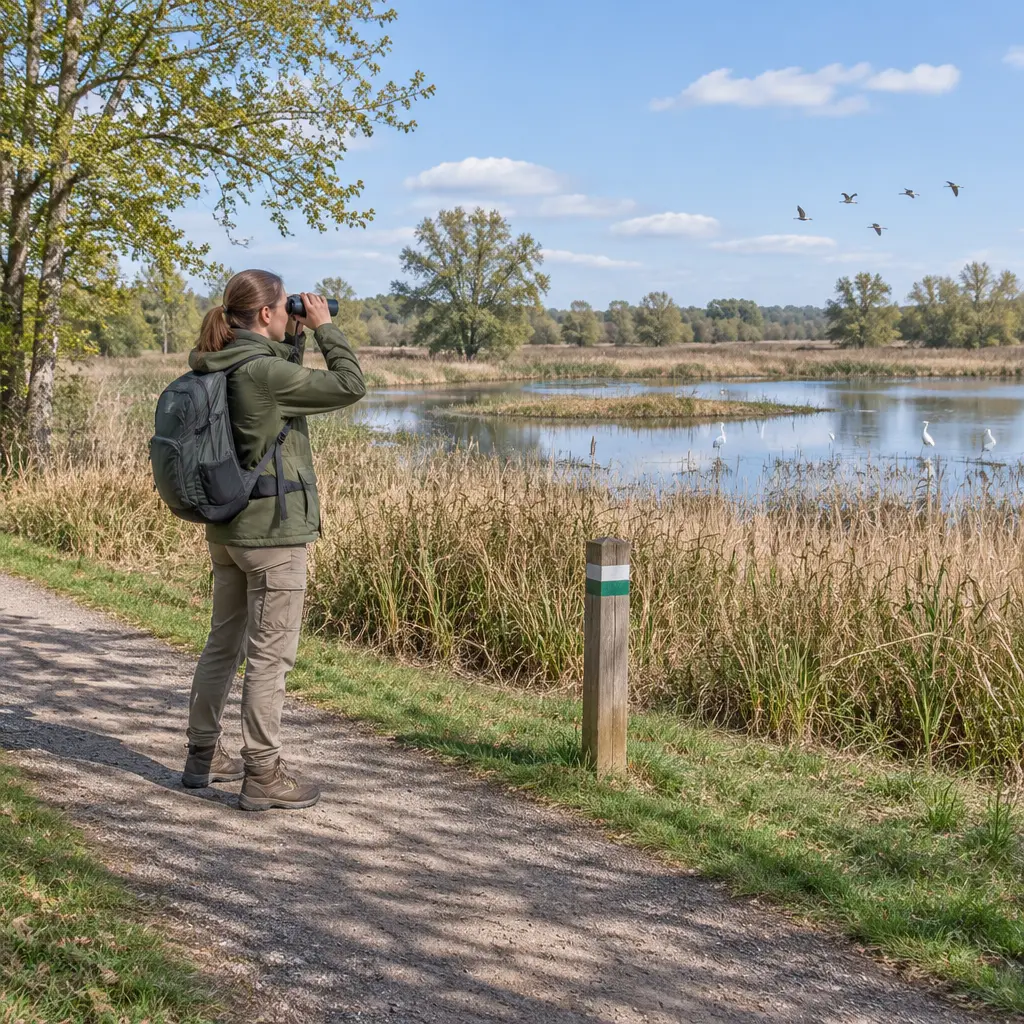
Outdoor leisure parks for birdwatchers and wildlife enthusiasts are public or privately managed landscapes where people can observe nature while walking, cycling, paddling, or taking part in other low-impact recreation. The strongest parks combine varied habitats, accessible trails, viewing facilities, and wildlife-sensitive management. Their value is more than scenic: the U.S. National Park Service reports that more than 325 million people visited U.S. national parks in 2023, while the U.S. Fish and Wildlife Service’s 2022 National Survey of Fishing, Hunting, and Wildlife-Associated Recreation counted 148 million Americans aged 16 or older as wildlife watchers. Together, these figures show why parks must serve visitors while protecting the species and habitats that draw them there.
How Outdoor Leisure Parks Support Birdwatching and Wildlife Observation
An outdoor leisure park for wildlife observation is a managed area that makes nature-based recreation possible without treating wildlife as a guaranteed attraction. The U.S. National Park Service describes national parks as places managed to conserve scenery, natural and historic objects, and wildlife while providing for public enjoyment. This conservation-and-access principle also applies to local parks, nature reserves, wetlands, and urban green spaces, although their rules and levels of protection differ.
The park’s defining attributes include habitat diversity, visitor access, interpretive information, and measures to limit disturbance. A wetland may support waterbirds, a woodland can offer forest species, and a coastal reserve may provide opportunities to observe migratory shorebirds. Combining habitats can broaden the range of wildlife visitors may encounter, but sightings vary with season, weather, time of day, and animal behavior.
Habitat diversity and ecological value
Habitat diversity means the presence of different ecological environments—such as wetlands, grasslands, forests, scrub, and open water—within a park or across its connected landscape. Each habitat supports different food sources, nesting conditions, and cover. The Ramsar Convention’s Global Wetland Outlook emphasizes the global importance of wetlands for biodiversity and ecosystem services, while also documenting widespread wetland loss. Parks that protect marshes, ponds, and river margins can therefore provide both wildlife habitat and valuable opportunities for nature observation.
Visitor access and low-impact recreation
Access includes the trails, paths, viewing areas, visitor information, and transport connections that help people experience a park. Good design directs visitors toward durable routes and suitable viewing points rather than allowing trampling across sensitive nesting or feeding areas. The National Park Service’s 2023 visitation total—more than 325 million visits—illustrates the scale at which recreation management matters in high-profile protected landscapes. Local parks may receive substantial use too, so clear routes, seasonal closures, and signs can help reduce conflicts between recreation and wildlife.
These core attributes appear in several park types. Their shared purpose is to make outdoor recreation possible, but their habitats, facilities, and conservation priorities differ.
Types of Outdoor Leisure Parks for Wildlife Enthusiasts
Wildlife-oriented parks range from formally protected reserves to everyday urban green spaces. The best choice depends on what visitors hope to observe, how much infrastructure they need, and the level of protection applied to the site. Park design should match facilities to the landscape rather than assume that every area is suitable for unrestricted access.
Wetland and waterbird parks
Wetland parks protect marshes, ponds, lakeshores, estuaries, or river edges where birds and other wildlife depend on aquatic habitats. Boardwalks, hides, and raised platforms can provide views while keeping visitors away from fragile banks and vegetation. The Ramsar Convention identifies wetlands as important ecosystems, but wildlife abundance and visibility can change with water levels, migration periods, and management. Visitors should use designated paths and avoid approaching nests or roosting flocks.
Woodland, grassland, and coastal reserves
Woodland parks offer shaded trails and opportunities to notice forest birds, mammals, and insects. Grassland reserves can support ground-nesting birds and pollinators, while coastal parks may protect dunes, tidal flats, and seabird colonies. Each habitat calls for different visitor practices: staying on marked paths is especially important in dunes and nesting areas, and dogs may need to remain leashed or be excluded during sensitive seasons. The International Union for Conservation of Nature’s protected-area guidance stresses that management should reflect a site’s conservation objectives and local conditions.
Urban nature parks and green corridors
Urban nature parks are green spaces within or near built-up areas, while green corridors connect habitats through features such as riversides, tree-lined paths, and restored wetlands. They can make wildlife encounters available to people who cannot travel to remote reserves. The U.S. Fish and Wildlife Service reported 148 million wildlife watchers aged 16 and older in its 2022 survey, including people who watched wildlife around their homes as well as on trips. Urban parks can thus support frequent, everyday nature engagement, although lighting, noise, free-roaming pets, and habitat fragmentation may require careful management.
Once the park type is understood, visitors can assess whether its facilities and management provide a safe, inclusive, and rewarding experience.
Facilities and Management That Improve Wildlife Viewing
Wildlife-friendly facilities help visitors observe animals without unnecessarily disturbing them. A practical park plan balances the needs of wildlife, visitors, and local communities. Facilities are most effective when they are maintained, clearly explained, and adjusted as ecological conditions change.
Trails, hides, and viewing platforms
Trails provide predictable routes through a park; hides and viewing platforms offer places to watch wildlife from a distance. These features can reduce off-trail movement and concentrate visitor activity on durable surfaces. Their location matters: a viewing point that overlooks a nesting colony too closely may cause disturbance even if it is well built. Parks should use seasonal closures, screening, or distance limits where monitoring shows that animals are being displaced.
Interpretation, wayfinding, and accessibility
Interpretation explains the landscape, species, and appropriate visitor behavior through signs, maps, guided walks, and visitor-center displays. Accessible paths, benches, toilets, clear trail information, and options for different mobility needs can make nature experiences more inclusive. The U.S. Access Board’s accessibility guidelines provide standards for outdoor developed areas on federal lands, including trails and recreation facilities. Parks should also communicate practical details—such as trail surface, distance, gradients, seasonal closures, and accessible viewing locations—before visitors arrive.
Conservation rules and responsible wildlife watching
Responsible wildlife watching means observing animals without pursuing, feeding, handling, or disrupting them. The U.S. Fish and Wildlife Service’s “Leave No Trace” guidance encourages visitors to watch wildlife from a distance and avoid feeding animals. Practical habits include keeping dogs under control, carrying out litter, following drone restrictions, and respecting closed areas. Binoculars and telephoto lenses help visitors see details without moving closer; recordings or apps should be used at low volume so they do not attract or stress wildlife.
Planning a Wildlife-Focused Park Visit
A successful visit begins with realistic expectations and preparation. Wildlife is not staged, and a quiet, patient visit may be more rewarding than trying to cover every trail. Planning also helps visitors avoid sensitive places and choose facilities suited to their needs.
Choose a season and habitat
Season affects migration, breeding, food availability, and visibility. Before traveling, check the park’s current notices, recent wildlife reports, weather, water conditions, and any seasonal restrictions. A local birding group or park naturalist may offer useful, site-specific guidance, but reported sightings are not guarantees. Give animals extra space during breeding and nesting periods.
Pack for observation and safety
Binoculars, a field guide, water, weather-appropriate clothing, and a charged phone can make a visit safer and more comfortable. Visitors should check whether the park allows dogs, cycling, or food, and whether toilets or drinking water are available. On remote trails, share a route plan and return time with someone. In areas with ticks, heat, cold, or hazardous terrain, follow local safety advice and carry suitable protection.
Record observations responsibly
Field notes can record species, date, time, habitat, and behavior, helping visitors learn how wildlife use a park across seasons. Citizen-science platforms such as eBird, managed by the Cornell Lab of Ornithology, collect bird observations that can contribute to research and conservation. Observers should avoid publishing precise locations for vulnerable species when disclosure could increase disturbance or the risk of collection.
The variety of park settings is illustrated by real-world examples, from internationally recognized wetlands to large urban parks.
Examples of Parks for Birdwatchers and Wildlife Enthusiasts
Everglades National Park, Florida
Everglades National Park protects a large subtropical wetland landscape in South Florida. The National Park Service describes it as a habitat for a wide range of wildlife, including wading birds, alligators, and manatees. Its trails, waterways, and observation areas show how a large protected landscape can support recreation while requiring visitors to follow wildlife-distance and habitat-protection rules. Conditions vary with season and water levels, so visitors should check current park guidance before setting out.
Point Pelee National Park, Ontario
Point Pelee National Park lies on a Lake Erie peninsula and is known for bird migration. Parks Canada notes that the park’s location makes it a significant stopover for migratory birds, particularly during spring migration. Boardwalks and marked trails help visitors explore wetland, woodland, and shoreline habitats. Migration timing varies from year to year, and visitors should follow posted directions to protect birds and sensitive habitat.
Singapore Botanic Gardens
Singapore Botanic Gardens demonstrates how a major urban green space can combine recreation, landscape heritage, and nature observation. UNESCO describes the Gardens as a historic tropical botanic garden, while the National Parks Board of Singapore documents its extensive plant collections and public landscape. Although it is not a wilderness reserve, its ponds, mature trees, and planted habitats offer opportunities to notice urban wildlife and illustrate the role of green spaces in nature-rich cities.
These examples show that wildlife-friendly parks need not share one design. Their common requirement is responsible management that matches public use to ecological capacity.
Conclusion: Protecting the Experience and the Wildlife
Outdoor leisure parks for birdwatchers and wildlife enthusiasts work best when habitat conservation, thoughtful access, and visitor education are planned together. Wetland, woodland, coastal, and urban parks each offer distinct opportunities, while trails, hides, accessible facilities, and clear rules can make observation safer and more inclusive. The scale of wildlife watching—148 million U.S. participants aged 16 or older in the Fish and Wildlife Service’s 2022 survey—underscores the public importance of these places.
Before visiting, check current park conditions, follow local guidance, stay on designated routes, and observe wildlife from a respectful distance. To deepen your understanding, consult park agencies, local conservation organizations, and citizen-science programs, and consider contributing carefully collected observations. Protecting the habitats that make wildlife encounters possible is essential to keeping parks valuable for both nature and people.
Sources: U.S. National Park Service, National Park Service Announces 2023 Visitation, https://www.nps.gov/orgs/1207/2023-visitation.htm; U.S. Fish and Wildlife Service, 2022 National Survey of Fishing, Hunting, and Wildlife-Associated Recreation, https://www.fws.gov/program/national-survey-fishing-hunting-and-wildlife-associated-recreation; Ramsar Convention on Wetlands, Global Wetland Outlook 2021, https://www.global-wetland-outlook.ramsar.org/; International Union for Conservation of Nature, Guidelines for Applying Protected Area Management Categories, https://portals.iucn.org/library/node/30018; U.S. Access Board, Outdoor Developed Areas: Accessibility Standards, https://www.access-board.gov/aba/guides/chapter-10-outdoor/; U.S. Fish and Wildlife Service, Leave No Trace: Wildlife Watching, https://www.fws.gov/story/leave-no-trace-wildlife-watching; Cornell Lab of Ornithology, eBird, https://ebird.org/about; U.S. National Park Service, Everglades National Park, https://www.nps.gov/ever/index.htm; Parks Canada, Point Pelee National Park, https://parks.canada.ca/pn-np/on/pelee; UNESCO World Heritage Centre, Singapore Botanic Gardens, https://whc.unesco.org/en/list/1483; National Parks Board Singapore, Singapore Botanic Gardens, https://www.nparks.gov.sg/sbg.