
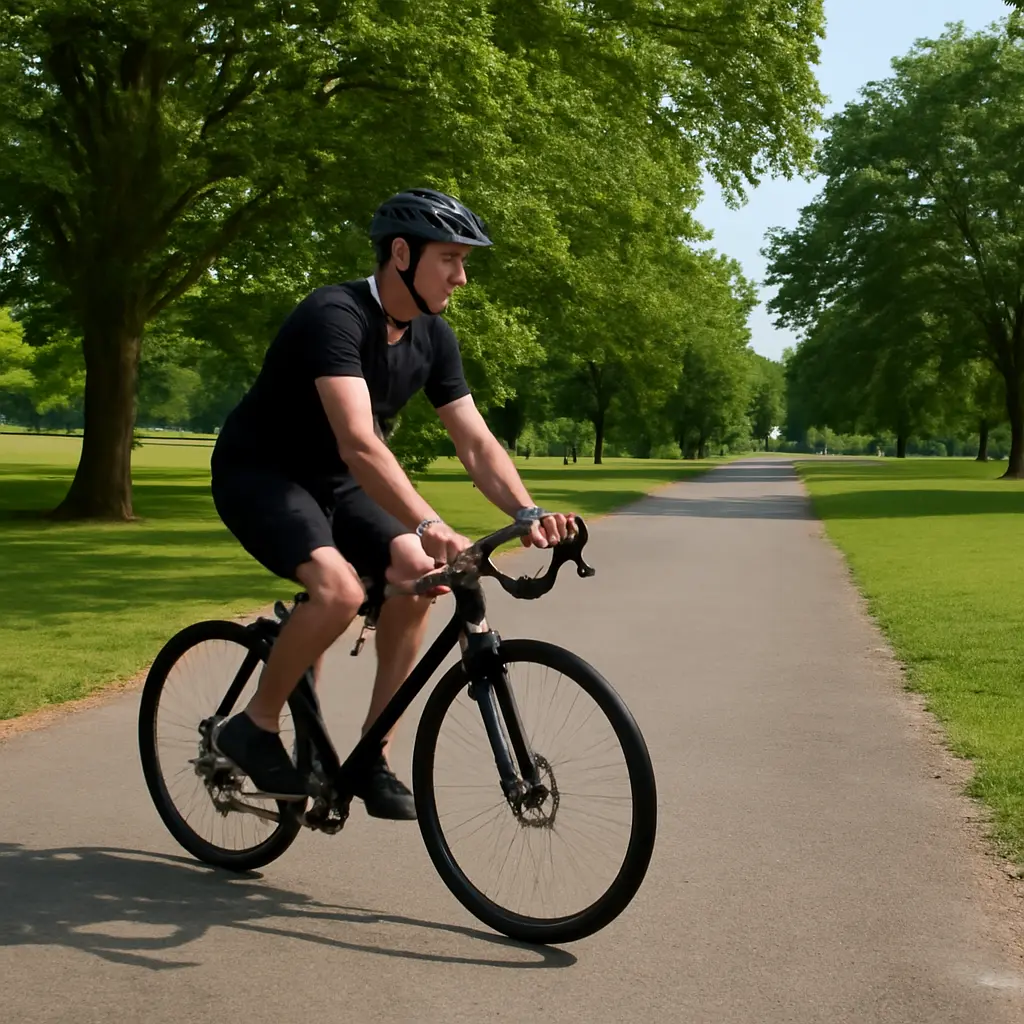
Casual bike rides can be more than a break from formal training: they can help cyclists build aerobic fitness, accumulate useful movement, and stay consistent without turning every outing into a test. The advantage is not that unstructured riding is always superior to a plan; it is that enjoyable, appropriately easy rides can make regular activity easier to sustain. That matters because the World Health Organization recommends adults get 150–300 minutes of moderate-intensity aerobic activity each week, while research on exercise adherence repeatedly points to enjoyment and manageable routines as practical ingredients in staying active. Here is how casual riding supports fitness, where it differs from structured training, and how to use both safely.
Casual cycling builds fitness through repeatable activity
Casual riding means cycling done primarily for transportation, recreation, or enjoyment rather than to complete prescribed workouts. It may include a relaxed neighborhood loop, a commute, or a social ride. The pace and route can vary, but the defining feature is flexibility: the rider is not necessarily following a fixed schedule of intervals, distances, or power targets.
That flexibility can still produce measurable physical activity. The U.S. Centers for Disease Control and Prevention classifies biking at under 10 miles per hour on level ground or with few hills as moderate-intensity activity for many people. Intensity is individual, however: a speed that feels easy to one rider may be strenuous to another, depending on fitness, terrain, wind, and health. The CDC’s practical “talk test” is useful—during moderate activity, a person can talk but generally cannot sing comfortably.
The World Health Organization’s 2020 guidelines recommend that adults accumulate at least 150 minutes of moderate-intensity aerobic activity per week, with additional health benefits possible up to 300 minutes. Those are weekly totals, not a requirement to complete formal workouts. Several ordinary rides can contribute, provided their duration and effort reach a suitable level.
Everyday rides add up across the week
A short ride may seem insignificant on its own, but repeated trips can create a meaningful activity habit. For example, three 20-minute rides contribute 60 minutes of cycling; five 30-minute rides contribute 150 minutes. These examples describe time, not a guaranteed training effect: the actual benefit depends on effort, the rider’s starting fitness, and whether the activity is safe and appropriate for them.
The evidence supports replacing inactivity with movement, but it does not establish that casual cycling universally outperforms structured training. A large 2019 analysis in The BMJ, led by researchers at the University of Cambridge and the University of Edinburgh, pooled data from eight studies involving more than 263,000 people. Commuting by bicycle was associated with a lower risk of all-cause mortality than non-active commuting. This was observational evidence, so it shows an association rather than proving that cycling alone caused the difference.
Enjoyment can support consistency
A ride that feels pleasant is often easier to repeat than an activity experienced as an obligation. A systematic review and meta-analysis by Teixeira and colleagues in Motivation Science examined self-determination theory in exercise and physical activity. It found that more autonomous forms of motivation—such as exercising because it is personally enjoyable or valuable—were positively associated with physical-activity behavior. This does not mean motivation alone guarantees adherence, but it helps explain why a flexible ride may suit someone who finds rigid plans discouraging.
Practical examples include choosing a scenic route, riding with a friend, or using a bike for an errand. These choices can make movement feel integrated into daily life rather than like an additional appointment. A chart comparing weekly ride minutes with the WHO’s 150-minute benchmark could help readers visualize how small trips accumulate; it should be presented as an illustration, not a promise of a specific health outcome.
Casual cycling differs from structured training in purpose and dose
Structured cycling training is a planned program that organizes exercise variables—such as duration, intensity, frequency, and recovery—to pursue a defined performance or fitness goal. The American College of Sports Medicine describes exercise prescription in terms of these components, commonly summarized as frequency, intensity, time, and type. In cycling, a structured plan might include easy endurance rides, intervals, recovery days, and gradual increases in workload.
Casual riding, by contrast, usually prioritizes convenience and enjoyment over a precise training stimulus. It can still include hard efforts, hills, or long distances, but these may occur without planned progression or recovery. The distinction is therefore about intention and organization, not whether a ride “counts.” Both approaches can support activity; structured programming is more useful when the goal requires specific, measurable adaptation.
Recreational rides and active transportation
Recreational riding is cycling for leisure, exploration, or social connection. Active transportation uses a bicycle to reach destinations such as work, school, or shops. Both can provide aerobic activity, but transportation rides may be easier to fit into an existing routine, while recreational rides may offer more choice over route and duration.
The CDC includes bicycling among examples of moderate-intensity aerobic activity, while the WHO guidelines recognize physical activity accumulated through transport, leisure, work, and household tasks. In practice, a commute contributes only to the extent that it involves meaningful movement; a very short or mostly downhill trip may not provide the same activity dose as a longer ride.
Structured rides target specific adaptations
Intervals, tempo sessions, and planned endurance rides are examples of structured workouts. They use deliberate changes in effort or duration to challenge the body in a repeatable way. A cyclist preparing for a long event, seeking a personal best, or returning to competition may benefit from this specificity, because the training can be matched to the demands of the goal.
The trade-off is that more planning can demand more time, attention, and recovery. A plan that is too ambitious for someone’s schedule or current fitness may be difficult to maintain. Casual rides can fill lower-pressure days or provide a practical starting point, but they cannot guarantee the progressive, goal-specific stimulus that a well-designed program aims to deliver.
Casual rides work best when effort and safety are sensible
Flexible riding is not the same as ignoring effort or risk. Riders can use perceived exertion and the talk test to keep most routine outings comfortable, then choose occasional harder efforts if those fit their goals and health status. People who are new to exercise, have chronic conditions, or experience concerning symptoms should seek individualized guidance from a qualified health professional.
Use an easy-to-repeat intensity
For a moderate ride, the CDC’s talk-test guidance offers a simple check: conversation should be possible, though singing may be difficult. On a very easy recovery outing, speaking should feel comfortable. Because cycling intensity changes with hills, traffic, temperature, and fatigue, judging effort by feel can be more practical than relying on speed alone.
A rider can also keep a basic record of ride time and how the outing felt. This is not a substitute for medical or coaching advice, but it can reveal whether riding is becoming more regular and whether effort is creeping upward. If every “casual” outing turns into a race, the supposed low-pressure benefit may disappear.
Make room for recovery and road safety
Recovery matters even when rides are informal. The National Institute for Occupational Safety and Health’s general guidance on physical activity emphasizes increasing activity gradually, especially for people who have been inactive. Riders can start with manageable distances, avoid adding duration and intensity too quickly, and take an easier day when unusually tired or sore.
Safety is part of whether a cycling routine is sustainable. The National Highway Traffic Safety Administration advises cyclists to wear a properly fitted helmet, use lights and reflective equipment when visibility is low, obey traffic laws, and ride predictably. Route choice also matters: protected paths or lower-traffic streets may make regular rides more comfortable for some people. Local rules and infrastructure vary, so riders should check the requirements where they live.
A flexible riding routine can complement a training plan
Casual rides and structured workouts are not competing philosophies. A recreational ride can provide low-pressure activity on a busy day, while planned sessions can serve a cyclist’s specific performance goals. For general health, the priority is a sustainable pattern that reaches recommended activity levels when possible; for competition, the priority may include a more carefully managed training load.
A practical weekly example
Someone building a routine might begin with several short, comfortable rides and gradually extend one or more outings. A rider aiming for the WHO’s 150-minute minimum could, for instance, spread that time across five 30-minute moderate rides or combine commuting with a longer weekend trip. This is an illustration, not a personalized prescription; individual needs and safe progression differ.
A cyclist following a formal plan could keep the plan’s key workouts while using truly easy social rides only when they do not undermine recovery. If a ride becomes unexpectedly strenuous, it is reasonable to shorten it or slow down. A simple weekly log of minutes, effort, and recovery can help distinguish useful consistency from accumulating fatigue.
Conclusion: the best ride is one you can sustain
Casual cycling can “beat” a structured plan in one important, practical sense: a flexible, enjoyable ride may be easier to repeat than a program that does not fit someone’s life. Repeated rides can contribute to the World Health Organization’s recommended activity volume, and observational research links bicycle commuting with favorable health outcomes. But casual riding is not inherently more effective than structured training, particularly when a cyclist has specific performance targets.
The useful approach is to match the method to the goal: ride casually to build an enjoyable routine, use a structured plan when specificity matters, and combine the two when appropriate. Start with rides that feel manageable, follow local safety guidance, and increase activity gradually. For further reading, consult the WHO physical-activity guidelines, CDC activity recommendations, and a qualified cycling coach or health professional if you need individualized advice.
Sources: World Health Organization, WHO Guidelines on Physical Activity and Sedentary Behaviour, 2020, https://www.who.int/publications/i/item/9789240015128; Centers for Disease Control and Prevention, Measuring Physical Activity Intensity, https://www.cdc.gov/physical-activity-basics/measuring/index.html; Celis-Morales, Carlos A., et al., “Association between active commuting and incident cardiovascular disease, cancer, and mortality: prospective cohort study,” The BMJ, 2017, https://www.bmj.com/content/357/bmj.j1456; Teixeira, Pedro J., et al., “Exercise, physical activity, and self-determination theory: A systematic review,” International Journal of Behavioral Nutrition and Physical Activity, 2012, https://ijbnpa.biomedcentral.com/articles/10.1186/1479-5868-9-78; American College of Sports Medicine, ACSM’s Guidelines for Exercise Testing and Prescription, 11th edition, 2021, https://www.acsm.org/education-resources/books/guidelines-exercise-testing-prescription; National Highway Traffic Safety Administration, Bicycle Safety, https://www.nhtsa.gov/road-safety/bicycle-safety.